Design language research
Colour and type were decided again on every new screen, and the result was that two pages of the same product did not look alike. Interfaces worth learning from were taken apart one by one — not to copy them but to see the reasoning: how many steps the scale has, where each colour is used, at what rhythm the spacing grows. What came out is not a screen but a sheet: the palette for both themes, the type scale, the status colours, the corner radii and the extracted component list. Every value here went into the product's token layer, and the design language of the later work grew out of this source. The six-point list at the bottom is part of the same job: after every change, look at it in both themes, at three widths, with the keyboard, and in its empty state. The study itself is archived — it is a source, not a product.
Let's talk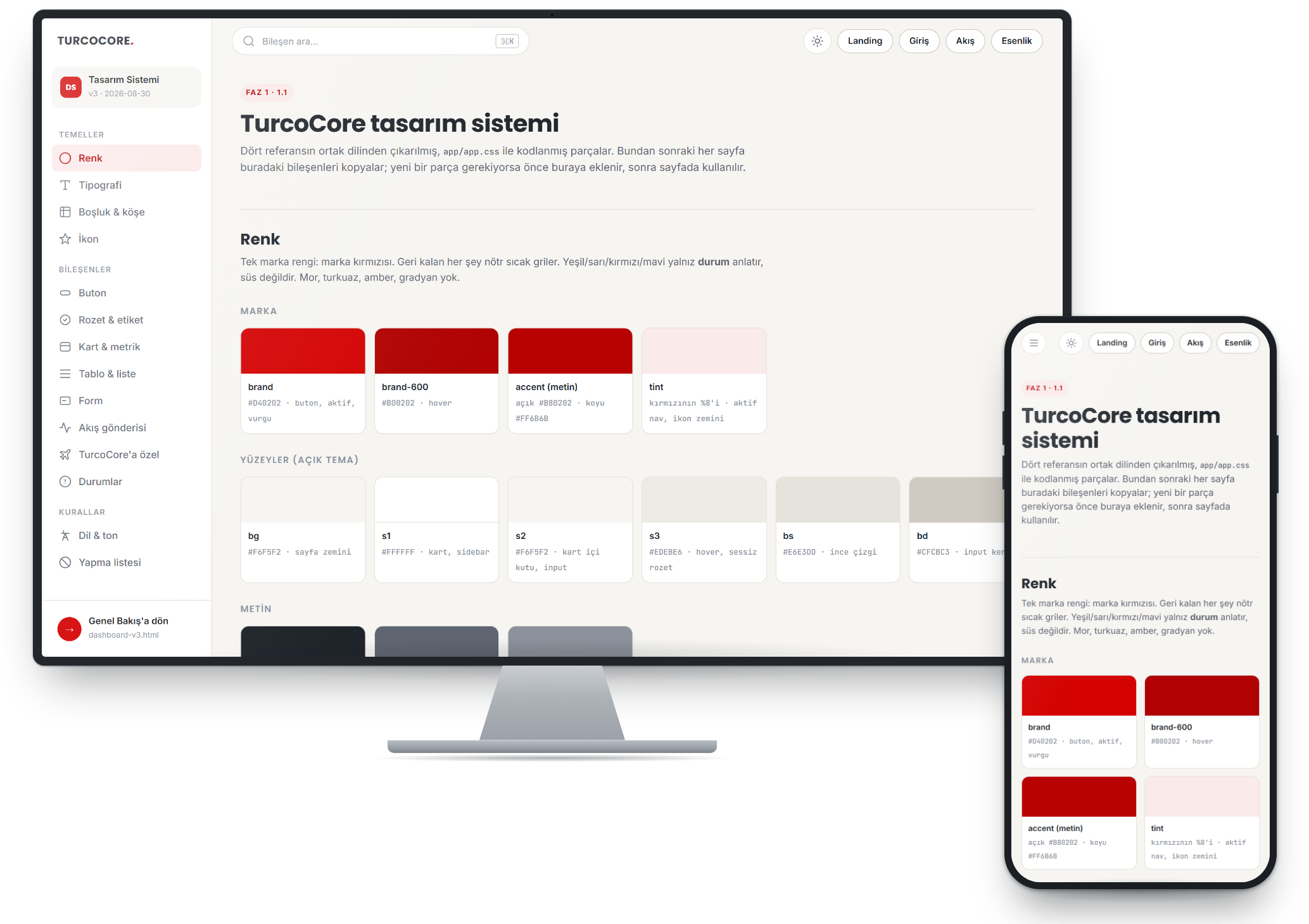
 Monitoring and alerting
 Backup and data refresh pipeline
 Airport operations platform
 Conversation analysis pipeline
 Pharmacy stock and expiry radar
 Flight tracking and alerting service
 LED screen targeting bot
 Financial statement analysis
 Content and reputation monitoring
 Job listing scanning and matching
 Automated application engine
 Language learning assistant